The Ultimate Guide to Setting Up a Home Cocktail Bar in the UK (2025)
A home cocktail bar transforms how you entertain. Rather than defaulting to wine, beer, or shop-bought mixers, you gain the control to craft genuine drinks—the kind served in proper bars. You'll save money, impress guests, and discover why bartending has become a serious hobby for thousands of UK home drinkers.
This guide covers what you actually need, which shortcuts work, and where people waste money.
Space and Placement
Most home bars occupy a corner of the kitchen, a drinks cabinet in the living room, or a dedicated section of a garage or spare room. The key is proximity to water and electrical sockets (for ice makers, if you go that route) and accessible storage.
Dedicated bar furniture—a small drinks cabinet or bar cart—works well in flats where you're tight on space. A full built-in bar, with storage underneath and shelving above, suits larger properties. Neither is essential. You can start with a sturdy side table and a shelf above it. What matters is keeping your bottles, tools, and glasses within arm's reach and organised enough that you're not hunting for things mid-pour.
Lighting matters more than people expect. Warm, adjustable lighting—rather than harsh overhead lights—makes the space inviting. A small LED strip or puck lights behind bottles look professional and cost little.
Explore bar furniture options to see what works for your space and budget.
Essential Tools
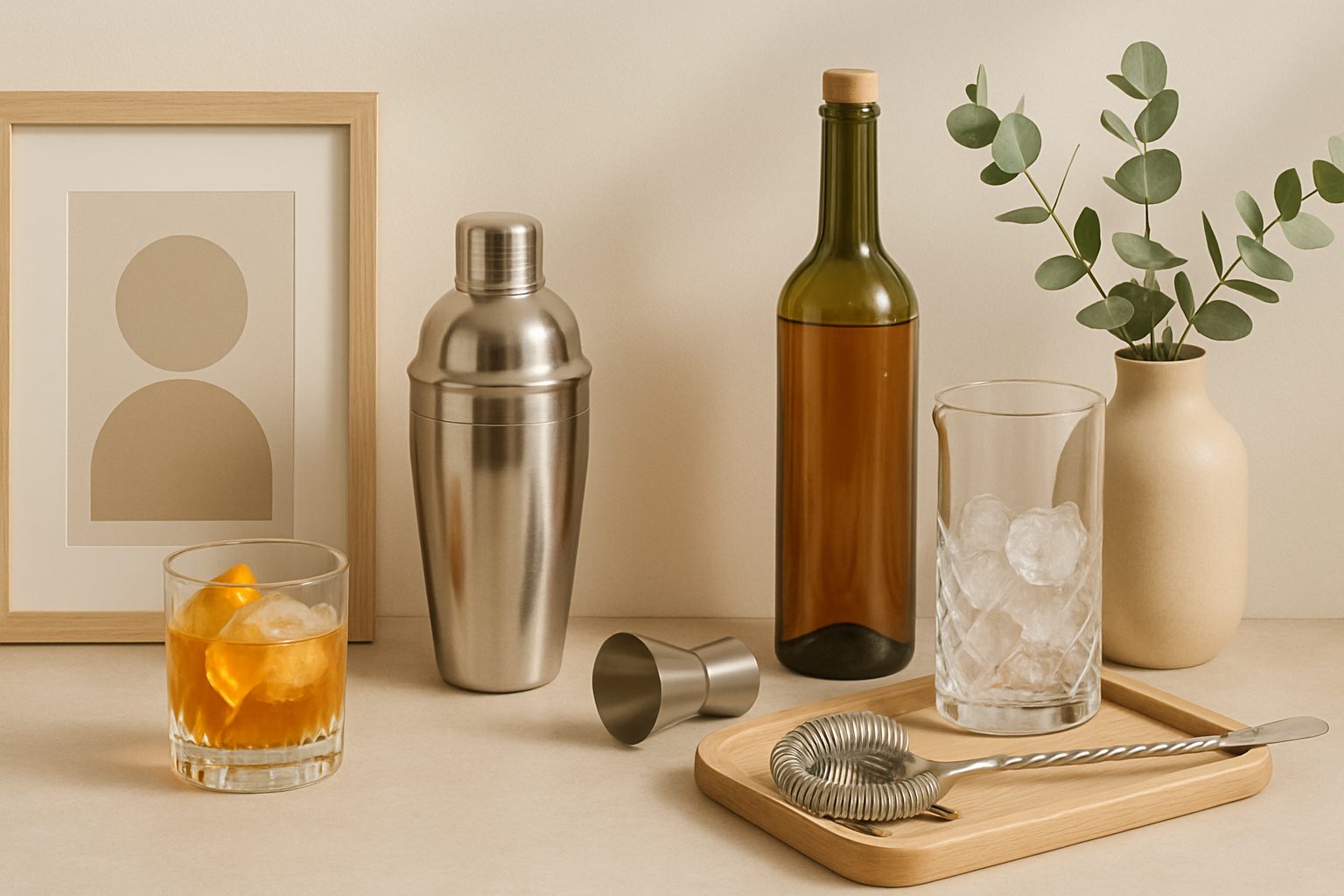
You need fewer tools than bars stock. A working home setup requires:
- Cocktail shaker — Boston shaker (two-piece metal) or a Cobbler shaker (one-piece with built-in strainer). Boston shakers are faster if you're making multiple drinks; Cobblers are tidier for beginners.
- Bar spoon — for stirring, not mixing drinks casually. A long, twisted handle lets you reach the bottom of glasses.
- Jigger — a small double-sided measure (typically 25ml and 50ml). Precision matters; free-pouring looks cool but wastes spirit and creates inconsistent drinks.
- Hawthorne strainer — clips into the shaker and holds ice back while you pour.
- Muddler — a wooden or plastic stick for crushing mint, citrus, or spices. A wooden spoon handles most jobs if you're patient.
- Lewis bag and mallet — for making clear, dense ice at home. Regular ice from your freezer is cloudy and melts fast. Alternatively, buy block ice or clear ice from a supplier.
A mixing glass (a sturdy crystal or thick glass) lets you stir drinks properly—some cocktails call for stirring rather than shaking. A bar mat, jigger, and bottle pourers (plastic spouts that sit in bottle necks) round out a functional setup.
Avoid gimmick tools. Bottle openers, cork removers, and Channel knives are useful; rotating bottle displays and electronic shakers are expensive clutter.
Find quality bar tools to see what fits your budget and needs.
Spirits: Core Stock
Start with a modest core:
- Vodka — neutral spirit, masks poor technique less than gin. A standard 40% bottle around £15–20 suffices.
- Gin — botanical, flavourful, essential. London Dry style (Tanqueray, Beefeater) is the default. Budget £15–25 for a solid bottle.
- Rum — rum cocktails span light to dark. Begin with a white or golden rum; expand to aged dark rum later.
- Whiskey — bourbon or rye. A decent bottle costs £25–35. Avoid blended Scotch unless you specifically want it; bourbon works better in most cocktail recipes.
- Tequila — 100% agave, not mixto (which includes sugars). A small bottle to start.
You don't need every bottle on the shelf. Build your collection with the drinks you actually want to make. Too many spirits gather dust.
Vermouth (dry and sweet) and liqueurs like triple sec, crème de cacao, or coffee liqueur are secondary. Add them as you attempt specific recipes.
Browse spirits and selection guides to understand what quality levels matter and where to source UK suppliers.
Glassware and Ice
You need three glass types: a coupe (for sours and stirred drinks), a highball (tall, for long drinks), and a rocks glass (short and sturdy, for spirits neat or on ice). A small selection—say, four of each—handles most home entertaining.
Generic coupe glasses work; you don't need vintage crystal. Buy from Dunelm, Argos, or specialist kitchenware shops. A set of six coupes costs £12–20.
Ice is non-negotiable. Cloudy ice from your freezer is full of trapped air; it melts fast and dilutes drinks. A Lewis bag (canvas bag plus wooden mallet) lets you crack block ice into chunks. Most UK ice suppliers will deliver block ice. Some people buy a clear-ice maker; they cost £200–500 and aren't necessary unless you're making drinks several times a week.
For now, ask your ice supplier for block ice. It's cheap and lasts longer in a home freezer than cubes.
Compare glassware options to find what matches your bar aesthetic and budget.
Mixers, Juice, and Ingredients
Fresh citrus juice—lemon and lime—is essential. Bottled juice tastes noticeably different; invest in a citrus juicer and fresh fruit instead. You'll spend £5–10 per week on lemons and limes.
Tonic water varies widely. Fever-Tree and Tonic Water Company both offer quality options; supermarket tonic is thinner and less complex.
Stock basic ingredients as you cook:
- Egg white (for certain sours—optional)
- Aromatic bitters
- Simple syrup (equal parts sugar and water, cooled)
- Grenadine (for colour and sweetness in specific drinks)
Don't buy pre-mixed syrups. Homemade simple syrup takes three minutes and tastes better.
Getting Started
Pick three cocktail recipes you actually enjoy drinking—a spirit-forward drink (like a Martini), a sour (like a Margarita), and a long drink (like a Gin and Tonic or Daiquiri). Gather the spirits, tools, and glassware to make them properly. You'll spend £100–150 to start a functional bar.
Make the same drinks repeatedly. You'll refine your technique, understand what flavours appeal to you, and know what to add next. After a month, you'll have clear instincts about which spirits deserve shelf space and which styles suit your palate.
The best home bars grow slowly, built on drinks you actually serve and spirits you actually enjoy.
More options
- Cocktail Shaker & Bar Tool Sets (Amazon UK)
- Home Bar Cabinets & Bar Carts (Amazon UK)
- Under-Counter Bar Fridges & Wine Coolers (Amazon UK)
- Whisky Decanters & Cocktail Glassware Gift Sets (Amazon UK)
- LED Bottle Display Shelves & Bar Lighting (Amazon UK)