How to Stock a Home Bar on a Budget UK: Build a Great Bar for Less
Building a home bar doesn't require spending hundreds on premium bottles or rows of specialist equipment. You can make genuinely good cocktails with a focused selection of affordable spirits, a handful of essential mixers, and basic tools. The key is prioritising versatility over quantity—choosing ingredients that pull their weight across multiple drinks rather than buying bottles for one-off recipes.
Most home bartenders overspend by treating a bar like a collection to display rather than a functional toolkit. When you're strategic about what goes on your shelf, you'll spend less, use more of what you buy, and actually enjoy the drinks you make.
The Essential Spirits: Where Your Money Goes
You don't need ten bottles of gin to make great cocktails. Three or four core spirits will handle the majority of classic drinks and modern twists. Start here rather than chasing expensive bottles.
Vodka is the foundation for good reason—it's forgiving, mixes well, and decent bottles are inexpensive. Look for Svedka, Asda's own-brand, or Tesco Finest around £12–16 per bottle. Vodka anchors martinis, cosmopolitans, and countless low-cost variations.
Rum is your second essential. A decent golden rum (not spiced, not overproof—just standard) costs £12–18 and covers mojitos, daiquiris, rum punch, and tiki-adjacent drinks. Bacardi or Plantation are reliable budget options. This single bottle justifies itself across summer drinks alone.
Gin matters more here because gin defines its own category. A London Dry gin around £15–18 gives you proper martinis, negronis, and gin-based spritzes. Avoid the cheapest supermarket versions (they taste thin) but skip premium craft gins—Bombay Sapphire or Tanqueray work perfectly and stay in budget.
Whiskey is optional but practical. A bottle of blended whiskey (Johnnie Walker Red or Chivas Regal) around £18–22 adds whiskey sours, old fashioneds, and simple serves to your repertoire. Scotch single malts are luxury purchases—blended whiskey is better value and mixes better.
Buy these spirits across a month or two if budget is tight. You're looking at roughly £50–70 for a functioning bar, and that one investment lasts months of regular use.
Mixers That Work Overtime
Your mixer costs matter more than your spirit costs if you're making volume. A bad mixer ruins even good spirits.
Tonic water is non-negotiable and worth buying decent versions—Fever-Tree or Schweppes cost slightly more but taste substantially better than generic supermarket tonics. Cocktails are mostly mixer, so this matters. A four-pack lasts several rounds.
Club soda and tonic are your highest-volume purchases. Buy big multipack bottles and keep at least two in rotation. These are your spray, your lengthener, your basic serve.
Fresh lemon and lime juice make an enormous difference. Bottled juice works but deteriorates quickly—fresh citrus is worth buying weekly. A lemon and lime, squeezed to order, elevates even budget spirits noticeably. This is the cheapest upgrade you'll make.
Ginger beer (for Moscow Mules and Dark and Stormys) costs around £2 per bottle and goes into enough drinks to justify the shelf space.
Vermouth, dry and sweet, costs £8–12 per bottle. These last for months because you use them by the small measure. They unlock martinis, Manhattans, and a dozen aperitif drinks from cheap spirits.
Buy supermarket own-brand versions where available—they're chemically identical to branded mixers and cost half as much.
Smart Shortcuts That Actually Work
Forget complicated tools and expensive accessories that promise to transform your cocktails. Three items handle 95% of drinks.
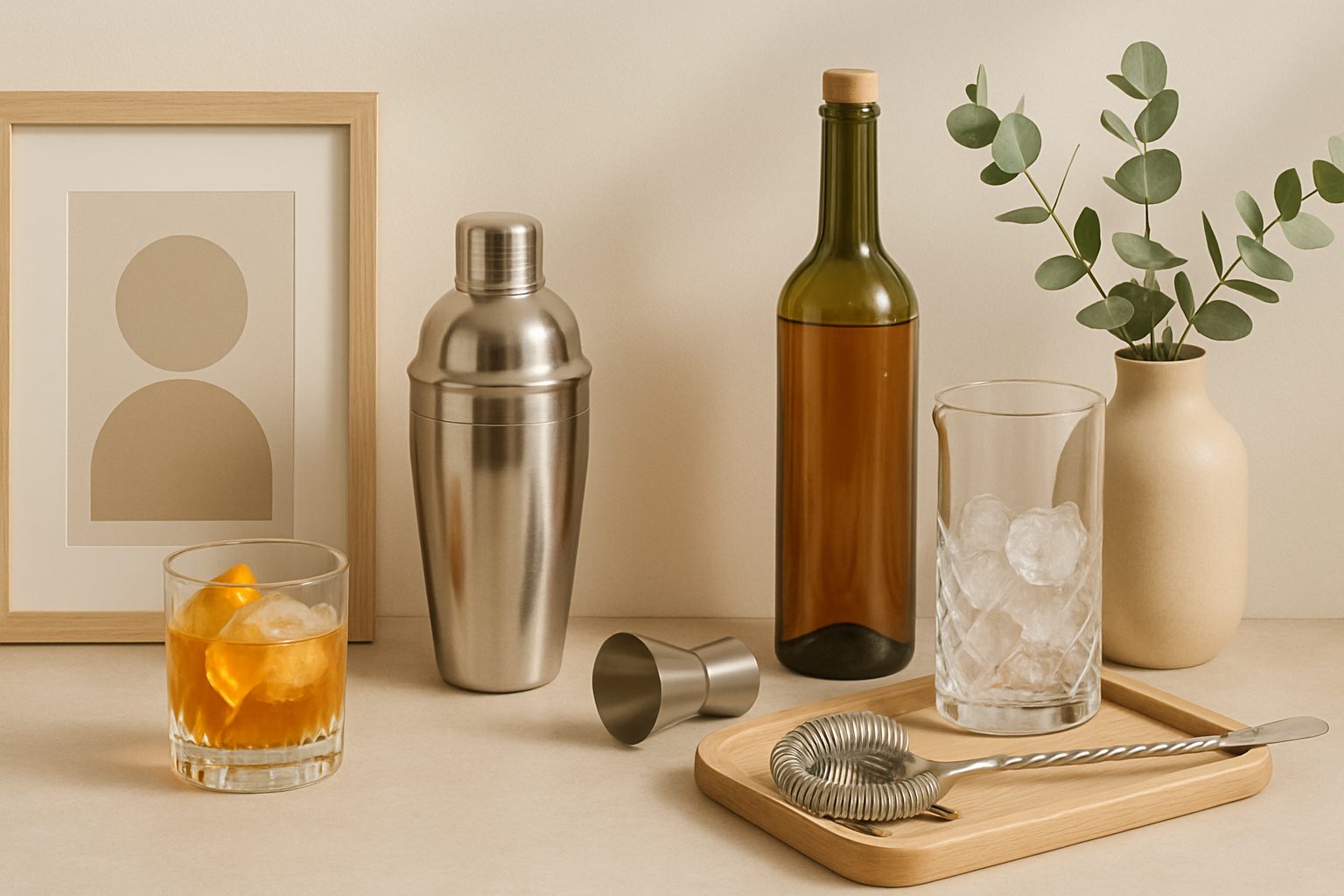
A cocktail shaker (any decent stainless steel one, around £8–12) and a bar spoon (around £3–5) cover mixing, shaking, and stirring. You don't need a full set or fancy Boston shakers—basic works.
A jigger (double-sided measure, around £2–4) ensures consistency. Free-pouring is a skill that takes time; jiggers are cheap insurance against overshooting spirits and wasting good drinks.
A wooden muddler (£3–6) handles mints and fruit. You genuinely can use a wooden spoon if you must, but a basic muddler is cheap enough to justify.
Everything else—bar mats, ice mallets, strainer screens—is optional initially. Make dozens of drinks first, then add tools as you identify what you actually use.
Budget Tool Sets Worth Considering
Many supermarkets and online retailers sell "cocktail starter kits" for £15–30. They're inconsistent in quality, but if a set includes a decent shaker, bar spoon, jigger, and strainer, it's reasonable value. Avoid sets filled with novelty items like pourers and layers you'll never touch.
If you're buying individually, you'll hit similar costs (around £20–25) but with better control over quality. Either approach works—just prioritise functional basics over decorative extras.
Building From Here
Once your core spirits and mixers are in place, expand slowly based on drinks you actually make. Add an inexpensive cream for whiskey sours. Pick up Cointreau or a budget triple sec when you want to make margaritas regularly. Buy bitters (Angostura, around £4–5 per bottle) when you're ready for old fashioneds and Manhattans.
The goal isn't a comprehensive bar—it's a practical one that makes drinks you'll serve and enjoy. Focused spending beats random accumulation every time.
A home bar built on budget principles is honest, functional, and genuinely teaches you about flavour because you're forced to understand what each ingredient actually does. You'll spend less, drink better, and have room to expand thoughtfully when you find your favourite drinks.
More options
- Cocktail Shaker & Bar Tool Sets (Amazon UK)
- Home Bar Cabinets & Bar Carts (Amazon UK)
- Under-Counter Bar Fridges & Wine Coolers (Amazon UK)
- Whisky Decanters & Cocktail Glassware Gift Sets (Amazon UK)
- LED Bottle Display Shelves & Bar Lighting (Amazon UK)