Home Bar Setup for Beginners UK: A Step-by-Step Starter Guide
Setting up a home bar doesn't need to be expensive or complicated. Whether you're hosting friends for casual drinks or just want to make proper cocktails at home, starting small and choosing the right basics will get you making impressive drinks without breaking the bank.
Plan Your Space
Before buying anything, decide where your bar will live. You don't need a dedicated room—a shelf, corner of a kitchen counter, or even a bar cart works perfectly for beginners.
Think about what you actually have room for. A compact setup might be just a few bottles and tools in a cupboard you bring out when needed. A more permanent spot could be a shelf unit or sideboard where everything stays accessible. Consider proximity to your kitchen sink (you'll need to rinse glasses and tools) and whether you want it on display or tucked away.
Storage matters too. Spirits need a cool, dark place away from direct sunlight. A kitchen cupboard or linen closet is ideal. Keep your tools and glasses somewhere you can easily grab them when you want to make a drink.
Get the Essential Tools
You don't need a huge collection of bar equipment. These core items handle 90% of home cocktail making:
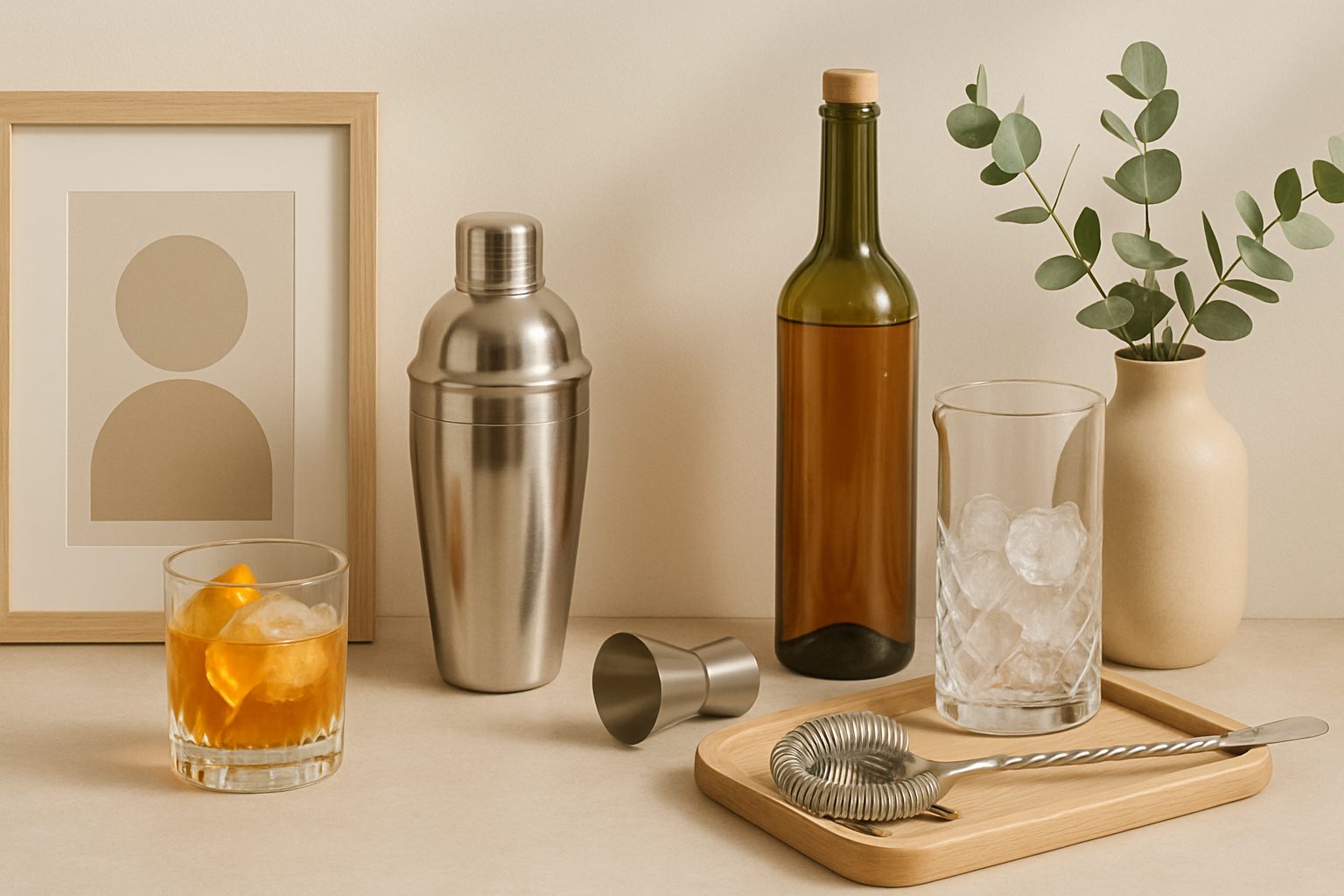
Cocktail shaker – either a Boston shaker (two metal cups that fit together) or a cobbler shaker (the classic three-piece with a built-in strainer). Boston shakers are cheaper and more durable; cobbler shakers look nicer but the built-in strainer can get stuck. You'll want to learn how to use whichever type you choose, but either works perfectly for beginners.
Jigger – a small measuring cup, usually 25ml and 50ml on opposite ends. Proper measurements make better cocktails. Cheap jiggers work just as well as expensive ones.
Strainer – a Hawthorne strainer (fits inside your shaker) or julep strainer (flat with a handle). Most people find Hawthorne easier to use.
Bar spoon – a long-handled spoon for stirring drinks. A standard teaspoon works at a pinch, but a proper bar spoon is inexpensive and makes stirring easier.
Muddler – for crushing fruit, herbs, or sugar in drinks like mojitos and old fashioneds. A wooden one is traditional and about £5–8.
Citrus juicer – a small hand juicer makes a real difference. Fresh juice tastes far better than bottled, and it's cheaper over time.
That's genuinely enough to start. You can add a bottle opener, mixing glass, and fine strainer later if you want to expand, but these five tools cover the basics.
Choose Your Starter Spirits
Buy fewer bottles and better quality rather than a huge collection. Three spirits give you enormous range:
Vodka – neutral, forgiving, works in dozens of drinks. A mid-range vodka costs £15–20 and lasts through plenty of cocktails.
Rum – adds character and sweetness. A decent white rum (£12–18) mixes well in everything from mojitos to daiquiris.
Gin – essential if you like gin and tonics, and brilliant in classic cocktails like negronis. A standard London dry gin (£15–25) is a solid choice.
You'll also want some basics that aren't spirits: dry vermouth (for martinis and negronis), simple syrup (you can make it at home with equal parts sugar and water), and tonic. A bottle of vermouth lasts months because you use small amounts, and it's worth getting a proper one rather than the cheapest option.
As you grow more interested, you might add bourbon, tequila, or more specialist bottles. But start with these and you can make dozens of classic cocktails.
Get Your Glassware
You only need three or four types:
Highball glasses (tall, straight-sided, 280–350ml) – for gin and tonics, vodka sodas, and any spirit with a mixer.
Coupe glasses (wide, shallow bowls on stems, 150–180ml) – for cocktails served "up" without ice, like margaritas and daiquiris.
Rocks glasses (short and sturdy, 210–280ml) – for spirits served on the rocks or simple cocktails like old fashioneds and negronis.
Martini glasses – optional. You can serve martinis in a coupe glass instead, so don't feel you need these straight away.
Buy a mix that suits what you'll actually drink. If you love gin and tonics, prioritise highball glasses. If you prefer sours and daiquiris, focus on coupes. Basic glasses are cheap (£2–4 each from supermarkets or pound shops), so buy a few of each type rather than expensive novelty glass sets.
Putting It Together
Start with a clean, organised space. Keep your bottles grouped together, tools in a small container or drawer, and glasses easy to reach. A bar cart works beautifully for this—you can roll it out when you want to make drinks and tuck it away otherwise.
Write down a few cocktails you actually want to make and check that your spirits and tools cover them. Buy fresh citrus (limes, lemons) just before a night when you'll use them, since they're best fresh. Make your own simple syrup—it takes five minutes and lasts a month in the fridge.
The first time you make a drink, don't rush. Read the recipe carefully, measure properly, and taste as you go. You'll find your rhythm quickly. Most people make better cocktails at home than they think, especially once they realise that fresh juice and proper measuring make an enormous difference.
A beginner's home bar isn't about having everything—it's about having the right essentials and using them well. You'll build from here naturally as you discover what you actually enjoy making and drinking.
More options
- Cocktail Shaker & Bar Tool Sets (Amazon UK)
- Home Bar Cabinets & Bar Carts (Amazon UK)
- Under-Counter Bar Fridges & Wine Coolers (Amazon UK)
- Whisky Decanters & Cocktail Glassware Gift Sets (Amazon UK)
- LED Bottle Display Shelves & Bar Lighting (Amazon UK)